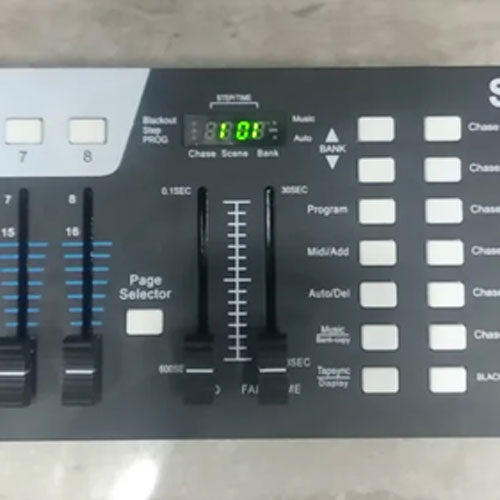

Description
LED DMX Controller — Manufacturer & Wholesaler, Delhi NCR
The piece of equipment everything else in the rig depends on
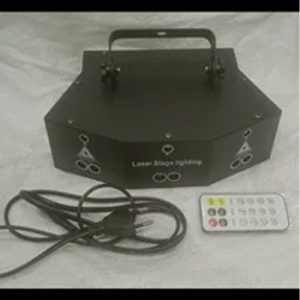
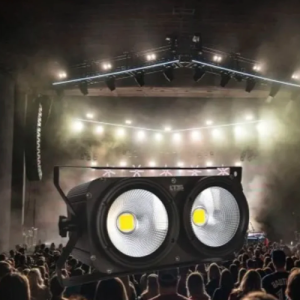
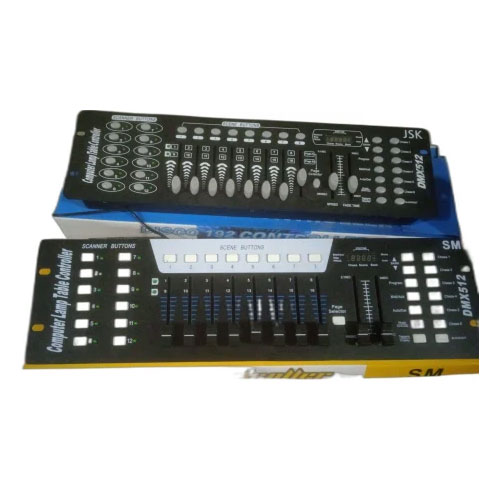
Every product we’ve covered in this catalog — the 1W RGB laser, the four head laser light, the 2 eyes blinder, the 3 head fan light, the 6 bee eye RGB laser — eventually plugs into something that tells it what to do. That something is the DMX controller. It’s the least glamorous item in a lighting rig and the most essential one: without it, you’ve got a pile of expensive fixtures running on auto-mode guesswork instead of a programmed, synced light show.
We manufacture LED DMX controllers at our Delhi facility and supply them wholesale to dealers, event companies, and rental businesses across Delhi NCR, and into Uttarakhand, Jammu & Kashmir, Goa, and Karnataka. If you’re stocking a full rig, our controllers are built and tested to run with our own fixture line as well as standard DMX-512 equipment from other manufacturers — full compatibility either way.
What you’re actually choosing between
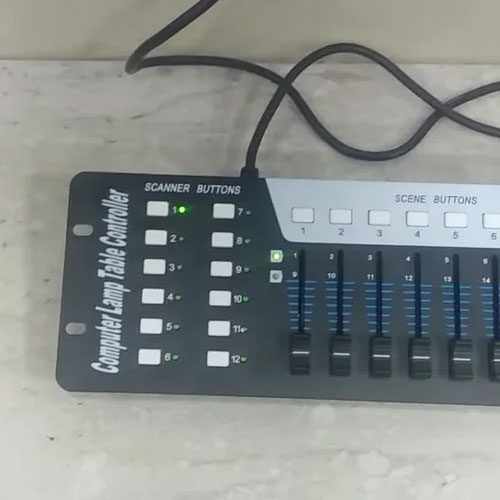
DMX controllers vary a lot more than fixtures do, and dealers often get this wrong on their first order — buying a console with more channels than their typical client setup ever needs, or worse, too few. Here’s the breakdown of what we manufacture:
| Model | Channels | Best For | Wholesale Price (Ex-Factory Delhi) |
|---|---|---|---|
| Basic DMX Controller (manual fader) | 192 channels (24 fixtures) | Small DJ setups, single-operator clubs | ₹4,500 – ₹6,000 |
| Mid-Range DMX Controller (LCD + scenes) | 384 channels (48 fixtures) | Wedding rigs, mid-size event companies | ₹8,000 – ₹11,000 |
| Pro DMX Controller (touchscreen + USB) | 512 channels, multi-universe | Rental businesses, large stage productions | ₹14,000 – ₹19,500 |
| Software-Based DMX Interface (USB-DMX) | Unlimited via software (e.g. QLC+, FreeStyler) | Tech-forward operators, fixed installations | ₹3,500 – ₹5,500 |
A quick note for dealers new to this category: channel count isn’t the only spec that matters. Scene storage (how many pre-programmed looks the console can save and recall) and chase programming (automated sequences that run without a live operator) are what separate a basic controller from a mid-range one in practical, daily use — not just raw channel count. We can walk new dealers through this distinction over a call before they commit to a bulk order.
Minimum order quantity is 5 units across any single model, with bulk discounts of 10–15% on orders of 20+ units. Every unit ships with a GST invoice, warranty card, quick-start manual, and — for the touchscreen Pro model — a printed DMX addressing guide, since that’s the single most common support question we get from first-time buyers. Request a wholesale quote or talk to our dealer team about tiered pricing.
Where these controllers actually go to work
Club installations and fixed venue setups, where a controller sits permanently wired into a booth and runs the same rig night after night. Wedding and event rental businesses, where portability and quick re-programming between venues matter more than raw power. Touring DJ setups, where a compact basic or mid-range unit travels in the same case as the lights it’s controlling. And increasingly, hospitality venues — hotels, resort bars, banquet halls — that are bringing lighting control in-house instead of hiring an outside operator for every function.
Delhi NCR — our home base
We dispatch from Delhi, which means NCR buyers get the shortest possible supply chain: same-day pickup on in-stock units, next-day on everything else.
We regularly supply dealers in Delhi (the Bhagirath Palace and Lajpat Rai Market electronics trading pockets, plus Karol Bagh), Noida (Sector 18 and Sector 63), Gurgaon (Udyog Vihar), Ghaziabad, and Faridabad. NCR-based event companies are welcome to book a demo and run a live test with their own fixtures before buying — it’s the fastest way to confirm which channel count actually fits your typical setup.
Uttarakhand
Uttarakhand’s hill-station tourism economy — Mussoorie, Nainital, Rishikesh — runs almost entirely on the hospitality and wedding-destination sector, and that sector has been steadily bringing lighting control in-house rather than renting equipment in from Delhi for every event.
Dehradun, as the state capital, is our largest Uttarakhand market by far — both for retail dealers and event companies. Haridwar, given its religious-tourism status, has unusual demand spikes tied to festival dates like Kumbh and Kanwar Yatra rather than the wedding calendar. Haldwani anchors our coverage in the Kumaon region. Rishikesh, increasingly a destination-wedding and resort hub, has growing demand for mid-range controllers suited to hotel installations. Roorkee, with its institutional and corporate event base, rounds out our core district list.
Transit from Delhi to most Uttarakhand districts runs 1–2 days for the plains cities (Dehradun, Haridwar, and Roorkee) and slightly longer for hill destinations depending on road conditions. View our Uttarakhand dealer network.
Jammu and Kashmir
J&K’s events market splits cleanly along its two regional hubs, and we serve both, though with different transit expectations for each.
Jammu is our primary access point — most freight into the region routes through here, and it’s where the bulk of our dealer relationships are based. Srinagar, despite seasonal access challenges in winter, has a steady and growing demand base, particularly from the houseboat-tourism and destination-wedding sector that’s expanded significantly in recent years. Anantnag and Baramulla round out our Kashmir Valley coverage, both with smaller but consistent dealer order volumes.
Given the region’s terrain and seasonal road conditions, we recommend J&K buyers place orders with some lead time — transit can run anywhere from 3–6 days depending on season and route conditions. Contact us directly before placing a time-sensitive order so we can confirm current transit estimates for your district.
Goa
Goa is a different kind of market entirely from the others on this list — its demand isn’t driven by weddings or religious festivals but by an extremely dense, year-round nightlife and beach-club economy, plus a steady stream of destination weddings from buyers who fly in equipment requirements rather than build local rigs from scratch.
Panaji (Panjim), as the state capital and a major commercial hub, anchors our Goa coverage. Margao, South Goa’s commercial centre, has a strong base of event production companies serving the beach-resort wedding circuit. Vasco da Gama, given its port-city commercial base, and Mapusa, North Goa’s trading hub close to the dense beach-club belt of Calangute and Baga, round out our district coverage. Notably, Goa dealers tend to order our Pro touchscreen model more frequently than other states — the club and resort circuit here runs sophisticated, multi-fixture rigs that benefit from the higher channel count and scene-recall features.
Transit from Delhi to Goa runs 3–4 days via road freight, or faster via air cargo for time-sensitive orders. View our Goa dealer network.
Karnataka
Karnataka, anchored by Bengaluru, is our largest market among these four states by a wide margin — the city’s scale as a tech, corporate, and entertainment hub creates demand across nearly every use case our controllers are built for.
Bengaluru leads everything — corporate event companies, club installations, and a large base of equipment rental businesses that service the wider South Karnataka region from a Bengaluru base. Mysuru, with its strong cultural festival calendar (Dasara being the standout), has predictable seasonal order spikes. Mangaluru, a coastal commercial hub, and Hubballi-Dharwad, North Karnataka’s twin-city commercial centre, both maintain steady dealer demand. Belagavi, near the Maharashtra border, and Davanagere, central Karnataka’s commercial centre, round out our district coverage.
Bengaluru’s tech-sector influence shows up in actual buying patterns too — we see more enquiries from this market specifically about our software-based USB-DMX interface than from anywhere else, likely tied to the city’s higher comfort level with software-controlled setups over manual fader consoles. Transit from Delhi to Karnataka runs 3–4 days via road, faster via air cargo. Reach out for a Karnataka wholesale quote.
Common questions from new dealers
What’s the actual difference between the basic and mid-range controller?
Channel count (192 vs 384) matters less in practice than scene storage and chase programming. The mid-range model lets you save and instantly recall complete lighting looks — useful for venues running the same few setups repeatedly — and run automated sequences without someone manually working the faders all night.
Will your controller work with lighting fixtures from other brands?
Yes. All our controllers use standard DMX-512 protocol, the industry standard, so they’ll run any DMX-compatible fixture regardless of manufacturer — not just our own product line.
What’s the wholesale price range?
₹3,500 for the entry-level USB-DMX software interface up to ₹19,500 for the full touchscreen Pro console, with 10–15% off on 20+ unit orders. Get a confirmed quote.
How long does delivery take to J&K or Goa specifically?
J&K typically runs 3–6 days depending on season and route. Goa runs 3–4 days via road, faster via air cargo. Both are longer than our standard NCR/plains-state timelines — contact us for current estimates before placing a time-sensitive order.
Can I get DMX addressing support after I buy?
Yes — every Pro model ships with a printed addressing guide, and our team handles setup questions by phone for all dealers, not just first-time buyers. Book a demo if you’d like a live walkthrough before purchasing.